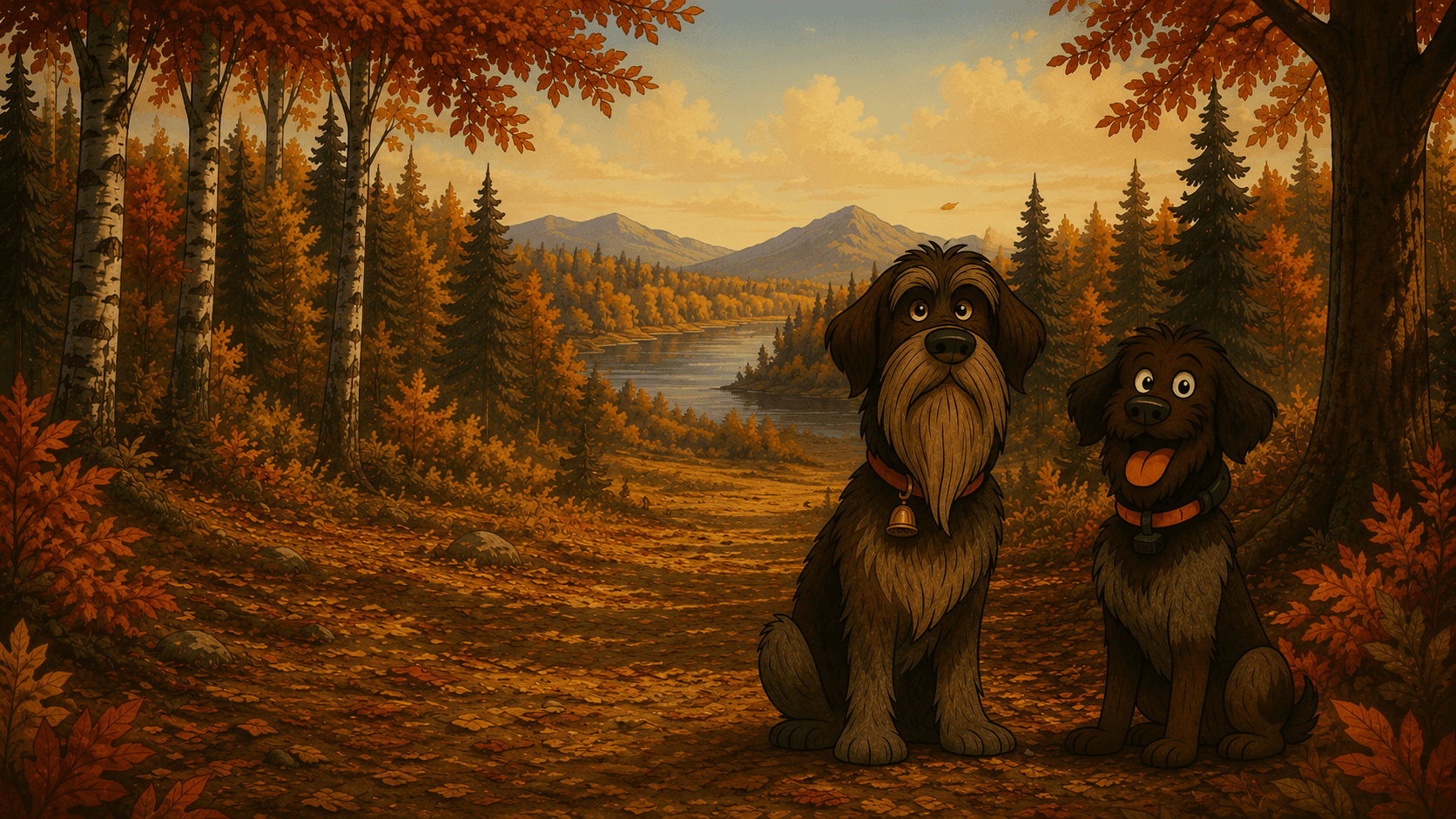
Cooper and Artax
My two hunting partners since the very first morning.
Without them, there is no real upland hunting. They do the work I simply cannot do: catch the scent, work the cover, lock up on a grouse, or block a woodcock trying to slip away through thick cover. I just walk behind them. They are the ones truly hunting. I’m simply the one carrying the shotgun and picking up the birds.
On The Upland Cook, Cooper and Artax are not there just for the image. They are part of every hunt, every story, and every harvest. You’ll find them throughout the recipes, the field photography, and all the hunting stories still to come.
Cooper
Cooper came first. He’s the dog that taught me what a true pointing dog really is not from books, but from the field itself. During those first seasons, we learned together. My mistakes, his mistakes, and the wins we earned along the way.
Today, he’s the steady one. The experienced dog who seems to know, the moment he steps out of the truck, whether the day will produce birds or not. He hunts with method, holds textbook points, and retrieves a grouse with the same care he would use carrying a nine-pound snow goose. First in the pack, in every sense of the word.
Artax
Artax is Cooper's half-brother — same line, same genetics, but his own temperament. Where Cooper is methodical, Artax is engine. Pure instinct. He pushes, he digs, he insists.
Together, they complement each other. Cooper finds the bird, Artax flushes it. Or Artax scents it first and Cooper comes in to confirm. It's become a choreography we never really taught them — it settled in on its own, in the bush, mile after mile.
Why the Wirehaired Pointing Griffon
The Wirehaired Pointing Griffon — Griffon Korthals — is a Dutch breed developed in the late 19th century by Eduard Karel Korthals. The idea: a versatile dog who hunts feather and fur, on land and in water, and who handles the cold thanks to a harsh, wiry coat.
For the Québec boreal forest, it's the perfect tool. The coat protects them from brush, burrs, and sub-zero temperatures. The temperament lets them be as comfortable quartering for grouse at 12°C as they are in a 2°C November marsh for ducks. These are dogs who don't fear the bush.